Medly, a family medication management app
- Project type
- Mobile application (PWA)
- My role
- Product Designer & Founder (UX / UI / Product)
Context & Problem
Medly is a shared household medication management application designed for families where one or more adults are responsible for tracking treatments for multiple people: children, elderly parents, or partners with chronic conditions.
Most existing solutions are built around the individual user. They offer reminders but no coordination layer, no way for two adults to manage the same household without confusion, double dosing, or missed doses.
The project started from a validated problem identified through 15 Mom Test interviews: 13 out of 15 participants regularly threw away expired medications, and most households managing multiple treatments had no shared system. The mental load fell entirely on one person.
The main objective was to create a shared, real-time medication dashboard for the whole family.
My Role & Responsibilities
I was responsible for the entire product process, including:
- customer discovery and problem validation, with real users
- product strategy and roadmap
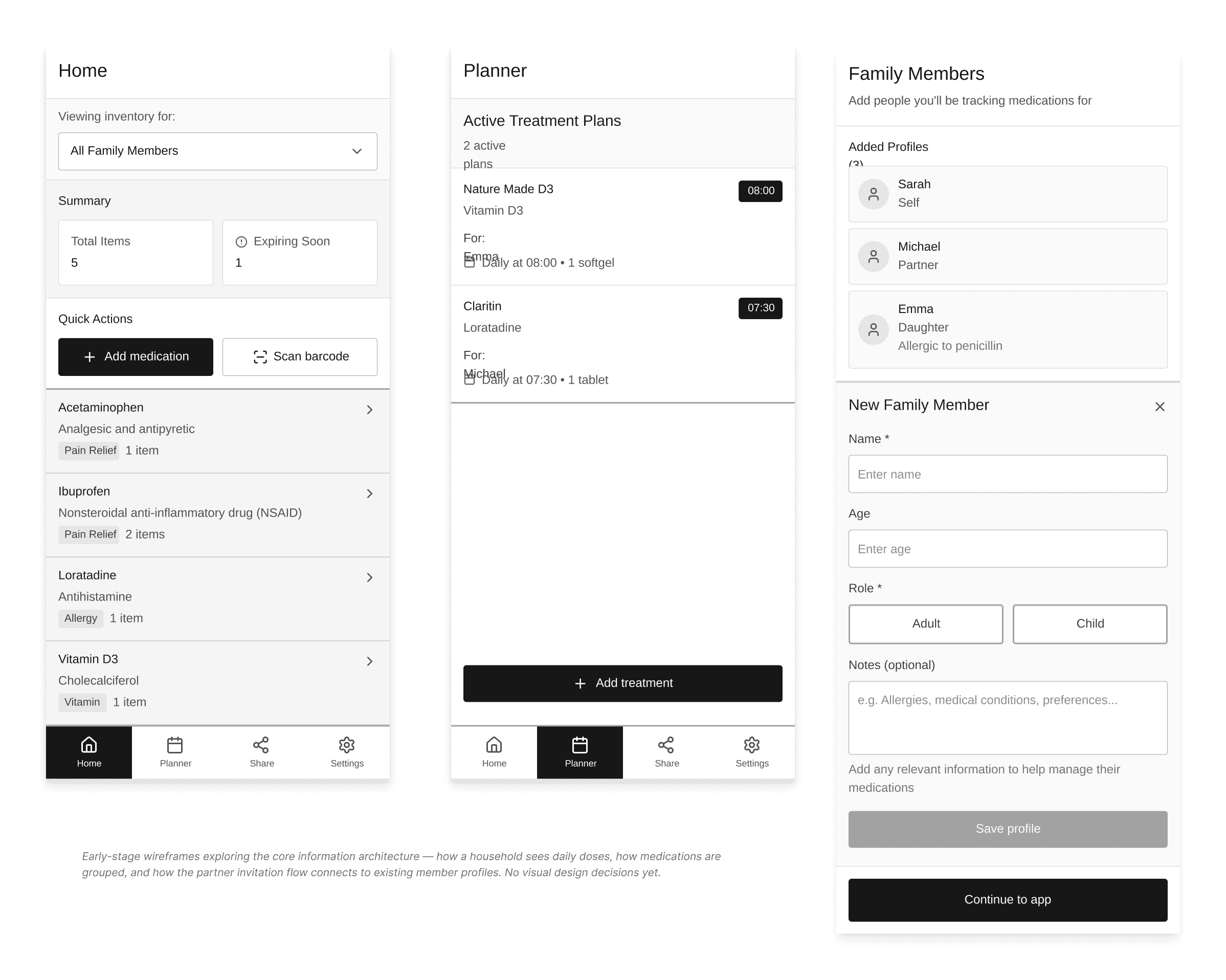
- UX research and information architecture
- Figma design system
- high-fidelity UI design across all screens and states
- interactive prototyping
- AI-assisted development with Claude Code
- front-end implementation (React + Tailwind CSS)
- Supabase backend configuration
- go-to-market strategy and accelerator deliverables (Upcelerator by Dreamups)
The project was approached as a full founder-led product effort, combining design, development, and business strategy.
Constraints & Key Decisions
Household-first architecture, not individual-first
Most competitors track medication per user. Medly tracks medications per household, with real-time sync across all authorized adults. This required a different data model from day one.
Two stock models instead of one
Medications are either countable (tablets, capsules) or containers (syrup, drops, spray). A single stock model would have created constant friction. Two separate tracking models with different UI patterns solved this correctly.
AI as a core part of the process
Claude was used across the entire product development cycle, from extracting precise design values via Figma MCP integration, to writing and refactoring the code with Claude Code, debugging, and iterating on component behavior. The first versions were built in Lovable; the code then moved to my own GitHub repository, with Supabase and Vercel, so the architecture stayed under my control. Landing page and marketing illustrations were generated with ChatGPT. This allowed me to move at a pace that would otherwise require a full product team.
Revenue model without data selling
The ICP manages health data for vulnerable family members. Selling that data to pharmaceutical companies was a non-starter both ethically and strategically. The entire revenue model is subscription-based, which also eliminates the conflict of interest between user trust and advertiser relationships.
PWA first, native later
Launching as a PWA allowed immediate availability without App Store approval delays. Native iOS and Android builds are still ahead.
Romanian first, English after
Many of the alternatives exist only in English. Medly launched entirely in Romanian - a positioning decision, not a limitation - and the English version came later, on the same structure.
Solution
Medly was designed as a shared, real-time medication management system for the whole household.
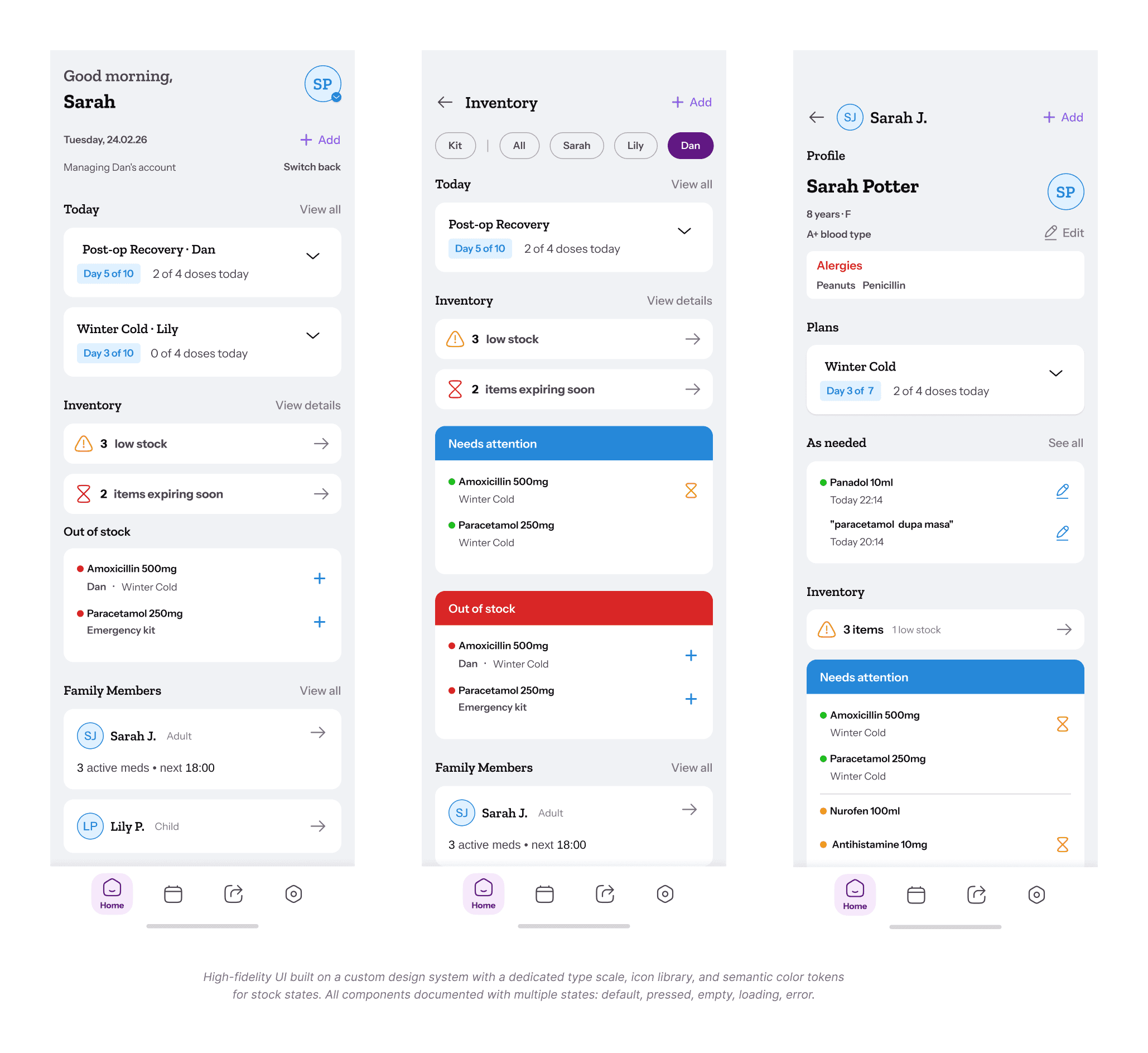
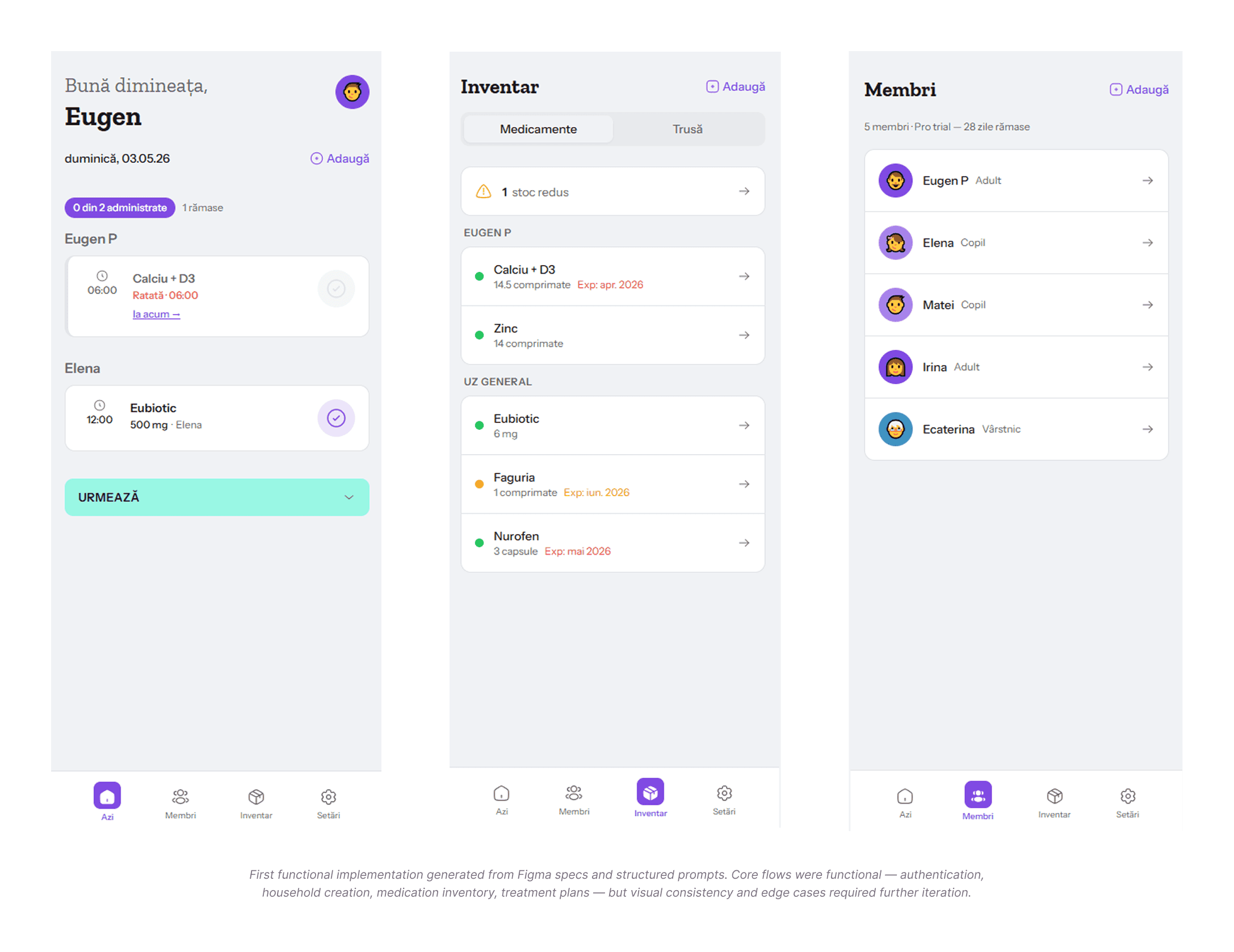
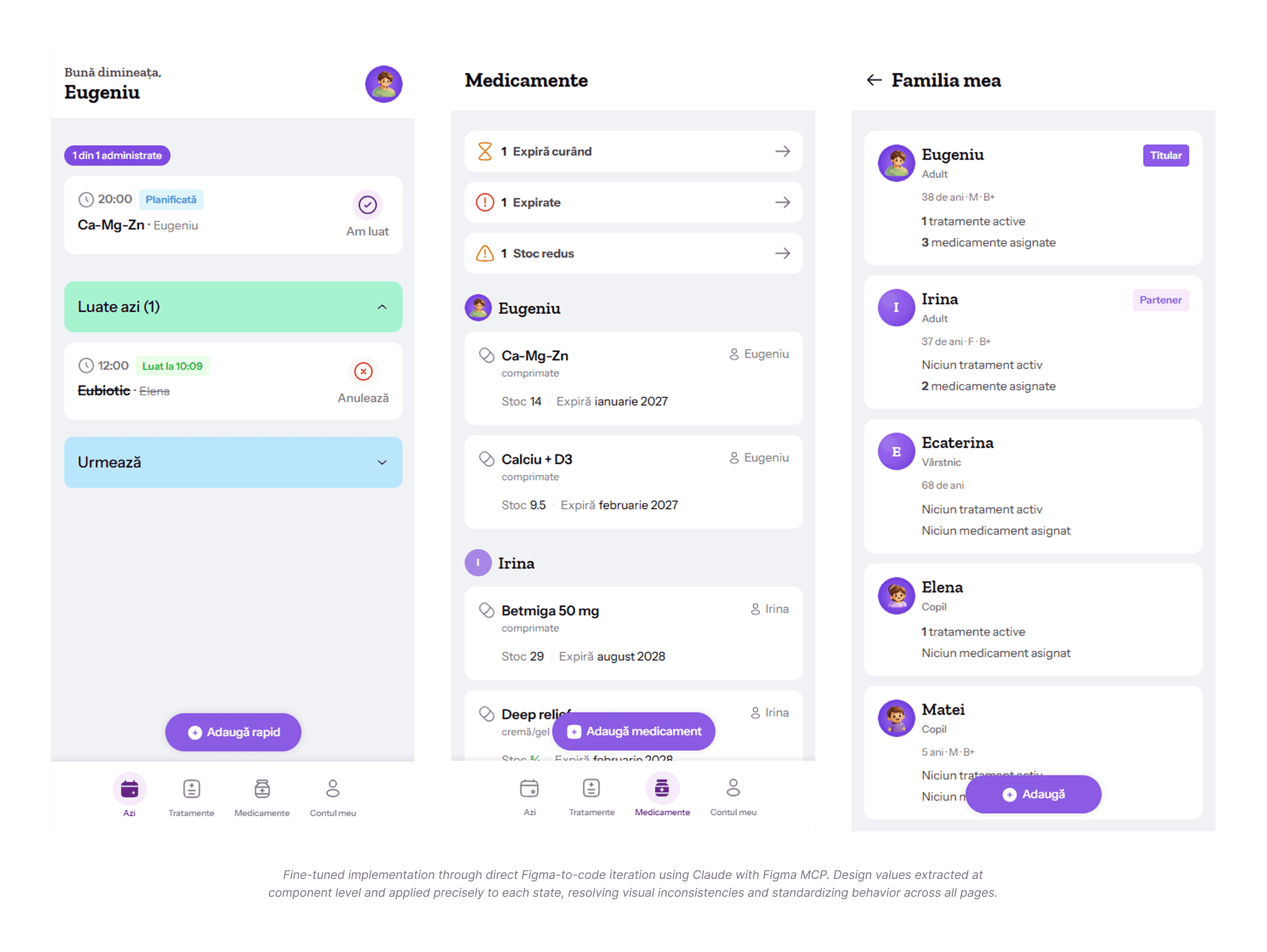
The Today Screen shows all doses for the day sorted chronologically. When one adult marks a dose as taken, the update syncs instantly to all other authorized adults, eliminating double-dose confusion without any explicit communication.
Stock alerts give the household proactive visibility across all medications. As-needed doses can be logged quickly with an optional health metric attached, creating a lightweight health history alongside the medication log.
The Partner feature allows a second adult to co-manage the household, linked to their existing member profile at acceptance to avoid duplicate records.
A three-tier subscription model (Essential, Plus, Family) provides a clear upgrade path, with the Family plan available free until August 2026 as part of the early adopter strategy.
Results
- MVP live at app.medly.work, fully functional household medication management system
- 10 beta testers onboarded, 29 issues identified and resolved
- Design system built from scratch in Figma, with 40+ components
- Household-first architecture with real-time sync, RLS security, and full audit trail
- Three subscription tiers launched with promotional pricing strategy
- Graduated from the Upcelerator by Dreamups accelerator program
What I Learned
- Building a product as a solo founder requires constant prioritization between what is designed, what is built, and what is validated.
- AI tools (Claude for design-to-code and debugging, ChatGPT for visual asset generation) significantly compressed the solo founder timeline, but they also introduced a new skill: knowing when to trust the output and when to intervene.
- Debugging and testing take significantly longer than building. The further into the project, the more expensive it becomes to refactor the information architecture.
- The household as a unit of health management is structurally different from the individual. Getting this right in the data model early avoided significant technical debt later.
- Conversations with potential users and testing with real people generate insights that no amount of internal iteration can replicate.
- Honest positioning (no data selling, no advertising) is itself a product decision that shapes every other decision, from pricing to feature prioritization.
Interested in working together?
If you’d like to discuss a similar problem or explore a collaboration, feel free to reach out.